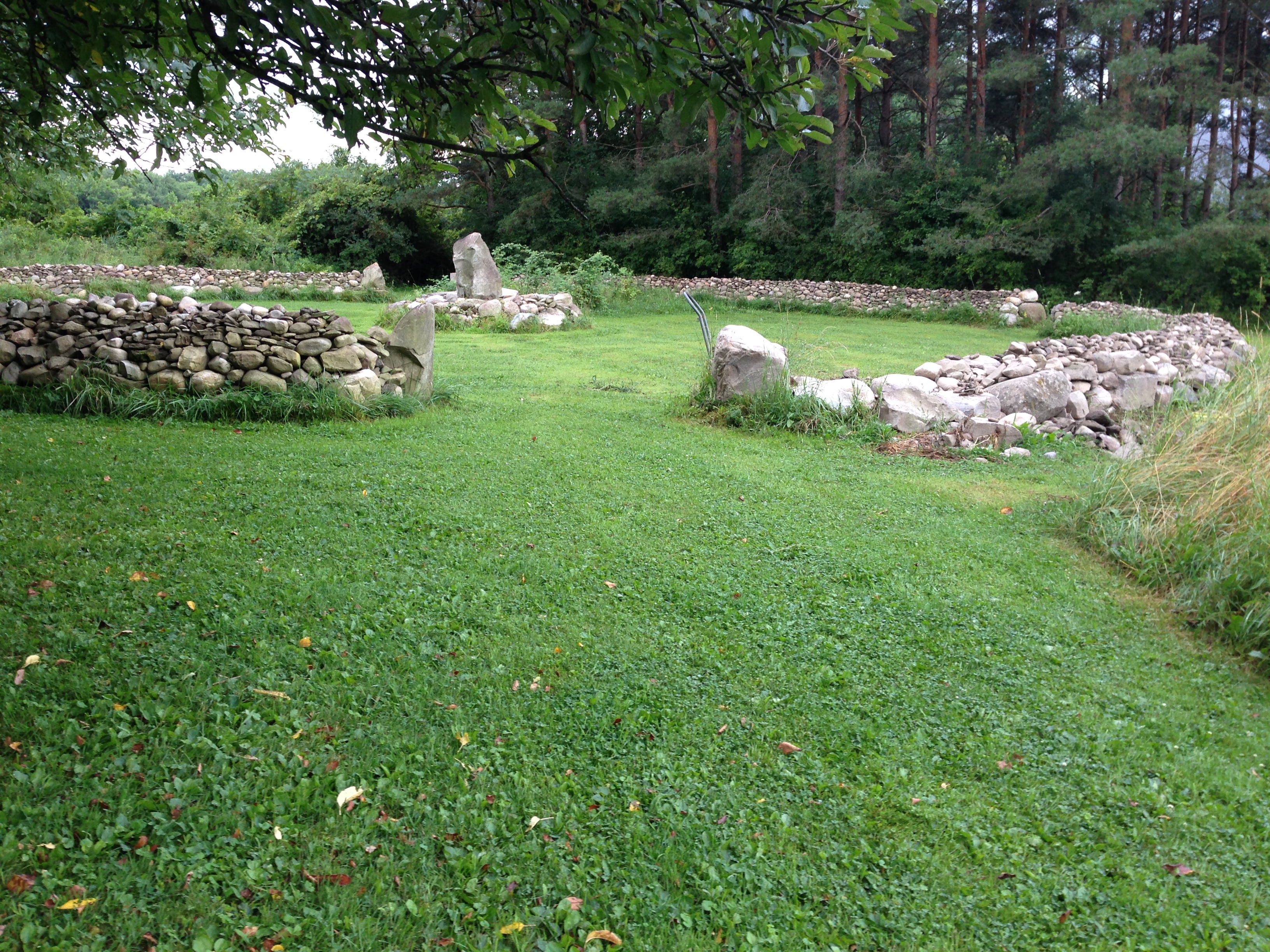
I do dry stone projects - laying stones I find around my property on top of each other without mortar. Below are some examples....
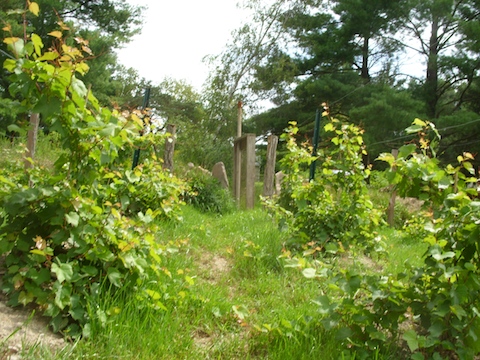
"A Vineyard Protected by a Moat" refers to the very real thing described, which I created in the spring of 2011, and which has each year since, provided a larger crop of de Chaunac red wine grapes, which I have pressed and fermented into wine.
But of course the physical universe -- especially those pieces of it that we shape directly -- reflects inner realities. And so, without undo psychological analysis mumbo-jumbo, it seems safe and indeed obvious to posit that "A Vineyard Protected By a Moat" is in some very real way a description of myself.
First, the vineyard: What could be more ancient a concept, more suffused with cultural, subliminal, Biblical, shared-consciousness archetype images and notions than this simple thing? Think of the parables, the ancient gods of the vine, the depths to which vineyards are embedded in Western Civilization. To have one is to continue a tradition of a thousand generations. To dig and built and plant one with one's own hands, using just hand tools -- indeed, this places one squarely within that tradition. And of course the growing vines, the harvest, the fermentation, and the drinking, are all woven together in our collective consciousness, and so doing these things seems almost abnormally normal. And trudging out into the snow in February to prune the vines in the bitter cold seems to be one of the most hopeful things I have ever done.
And so the vineyard is laden with history, memory, and delicious fruits whose cultivation process crosses all seasons.
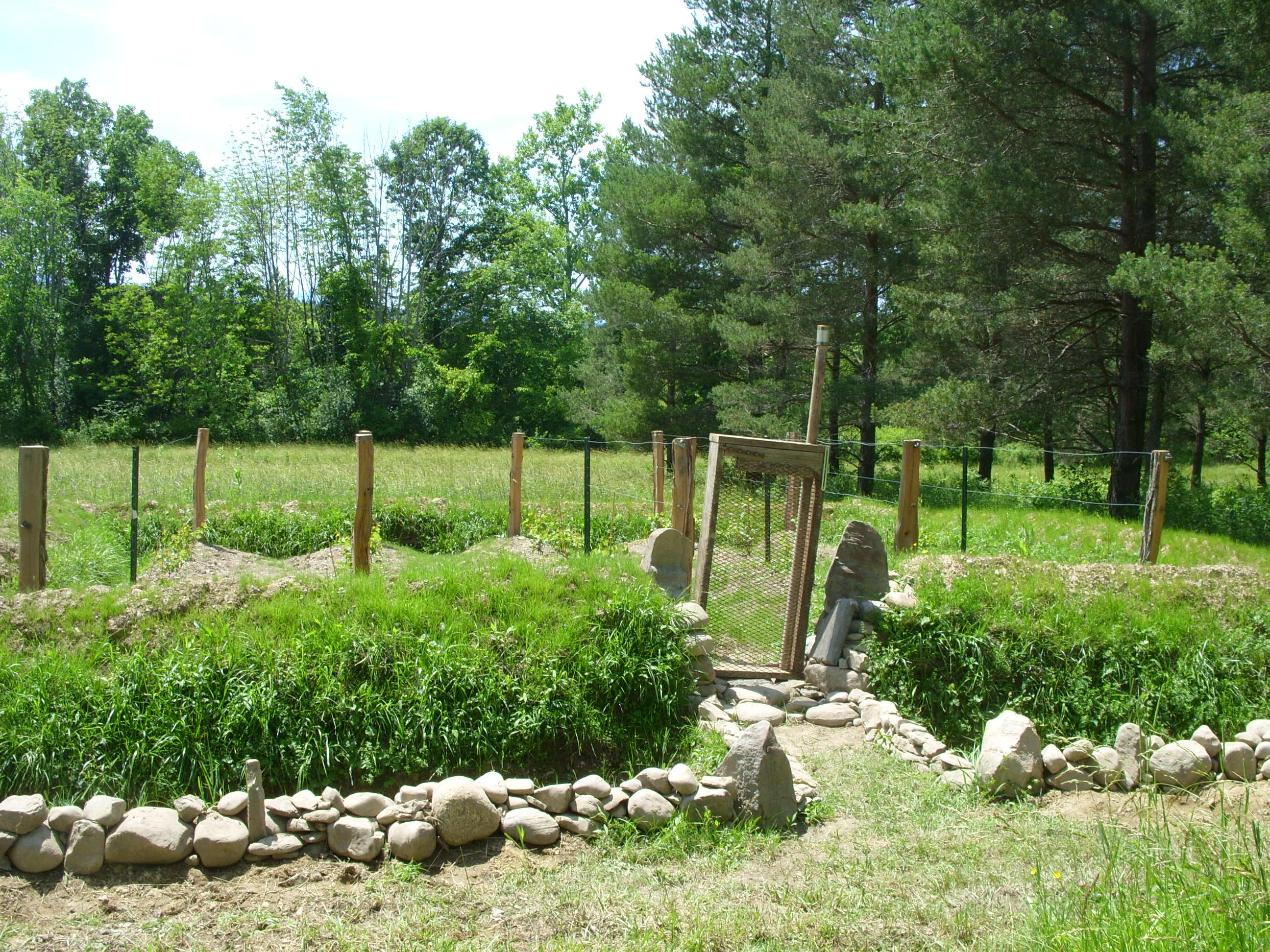
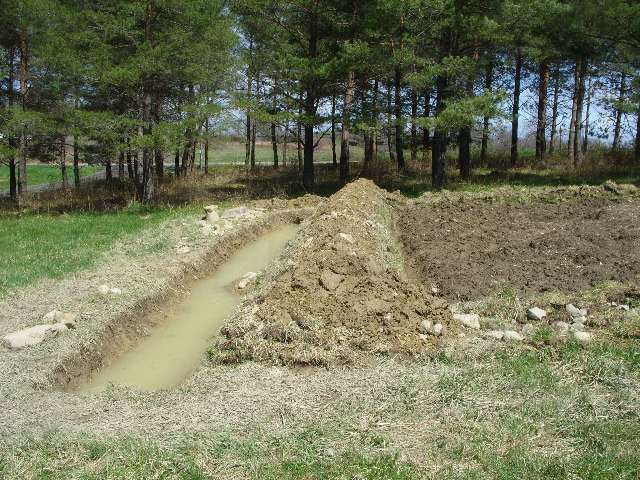
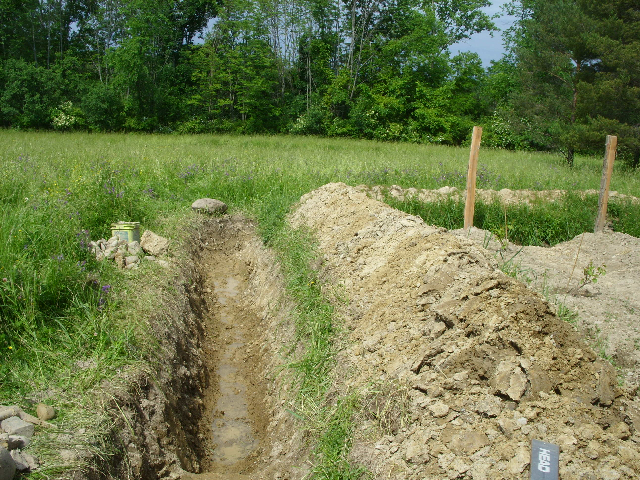
So what about the moat? Well, ostensibly it is intended to keep the deer and rabbits out, and it has been very successful in this regard. But what does it mean? It forms a nearly perfectly square, carved into the earth as a trench. When it rains, little rivulets flow through the trenches and water gathers at the east end of the moat. But in a very real sense the moat is a physical barrier that creates a psychological barrier and, more importantly, a psychic memory of sorts of moats to protect a habitation, such as a castle or town. The moat, then, and its narrow exception - a land bridge by which one gains entry to the vineyard, is symbolic of my own inner vs. outer life. I would like to think I am cultivating something of value, all year round, yielding periodic fruit - protected from the forces of chaos outside of myself.
Simplistic? Perhaps, but I daresay there is some truth in this analysis...
Below is a one-minute video showing the growth of my de Chaunac vines in the first year.
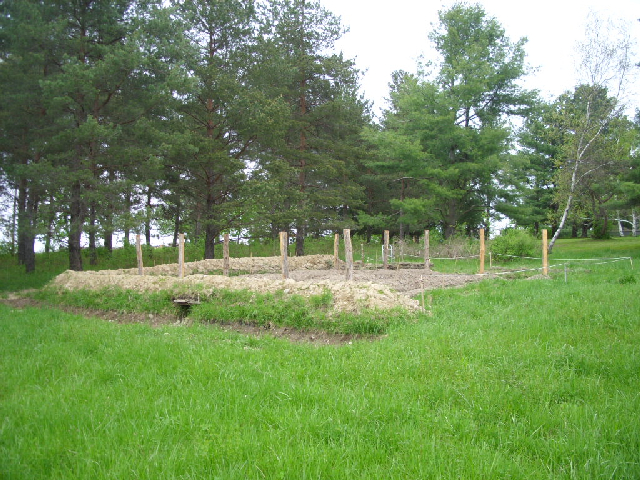
I decided to create a small vineyard in early spring 2011. Having 3.5 acres of land, much of it a field, space was not a problem.
In mid-March I began digging up sods in a space roughly 30 feet by forty feet on a gently sloped section of the field. As I dug the sods I shook them out, saved the topsoil (or topmud, as it were most of the time) and returned the topsoil to the areas where I had removed the sods.
I stacked the sods around the perimeter in two lines, forming the outline of a wall that would surround the vineyard. Once the entire 30 by 40 foot area was done, I leveled it up as well as I could by distributing leftover topsoil in the low spots.
Rather than spend thousands of dollars on ugly deer fencing, I decided to dig a moat around the perimeter of the vineyard to keep deer out. So I began removing the sods located outside my growing "sod wall", forming a shallow pit. I deepened it of course, digging down roughly four feet, throwing the rocky, clay soil onto the growing mound of a wall, and again shaking out the topsoil and adding it to the vineyard itself.
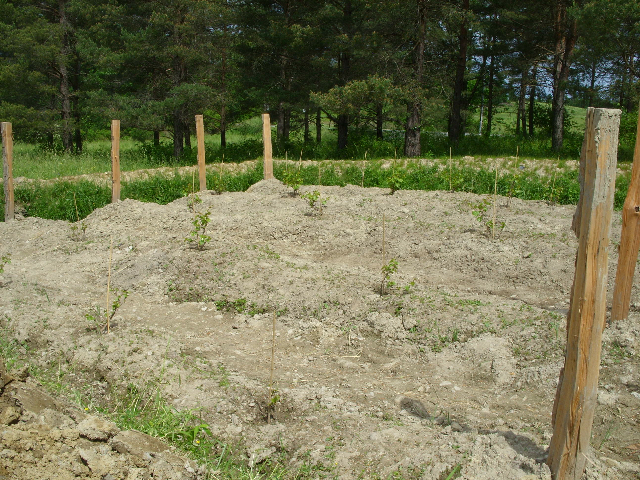
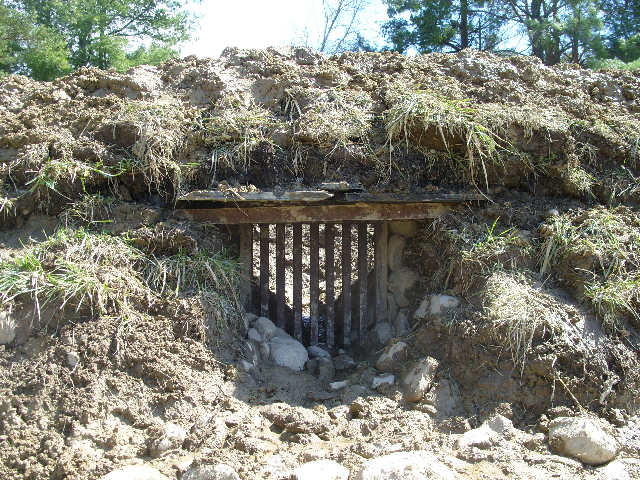
Then I formed mounds on which to plant my vines, roughly a foot tall and arranged so water flows down between them to a grate at the downhill end of the vineyard, which drains into the lowest end of the moat.
This drainage arrangement has worked out wonderfully. No matter how much of a deluge we get, it flows out in an orderly manner.
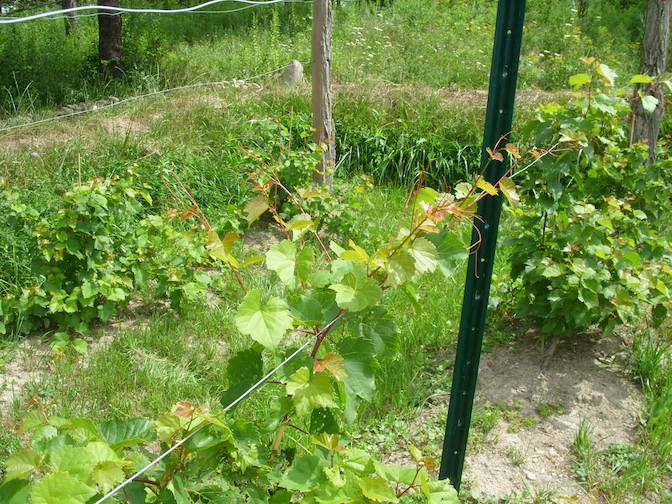
I ordered 20 De Chaunac vines, two-years old, from a nursery in Canandaigua, NY, and planted them in the rows. I planted grass seed between them, which has taken well.
It took a while for the dead-looking brawn twigs to come to life and sprout, but they have been going gangbusters once they started.
Being in the Hudson Valley, I chose De Chaunac because of the success many other Hudson Valley wine-growers have had with it. Supposedly it winters well with minimal freezing damage, and is decently resistant to disease. And it can make an all-around good red wine.
I have yet to make wine or get through a winter, so we shall see.
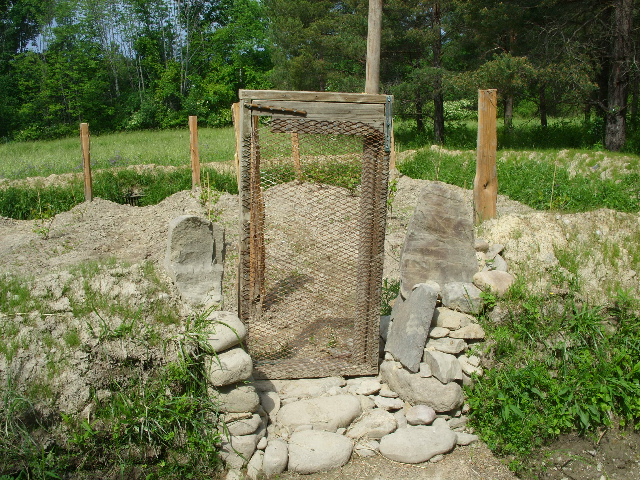
Once the moat was completed all the way around (except a "land bridge" leading to the door) - I installed the door, made of treated wood scraps and metal I had laying around the property. (The drainage grate too was a fond object.)
Around the door is some dry stone work. I also built a low wall all around the moat so no one falls in.
I bought locust posts and galvanized 14 gauge wire, and sunk the posts into two-foot holes lined with large rocks. I strung the wire and left random pieces of metal attached to the wires on either end of the posts so I can jam objects behind them to tighten the wires later if necessary. Since grape vines can live more than 50 years it's a good idea to plan in advance for the long haul and use materials that will survive the weather (galvanized steel) and rot (locust is naturally microbe-resistant).
So far the grape vines are doing splendidly! Nineteen out of the 20 plants I bought sprouted and are growing like weeds. More than half have send off tendrils reaching the bottom wire (as of August) and a few have reached the top wire! I have been weeding around them by hand and I daily go in and kill whatever Japanese Beetles I find. (no pesticides or herbicides necessary).
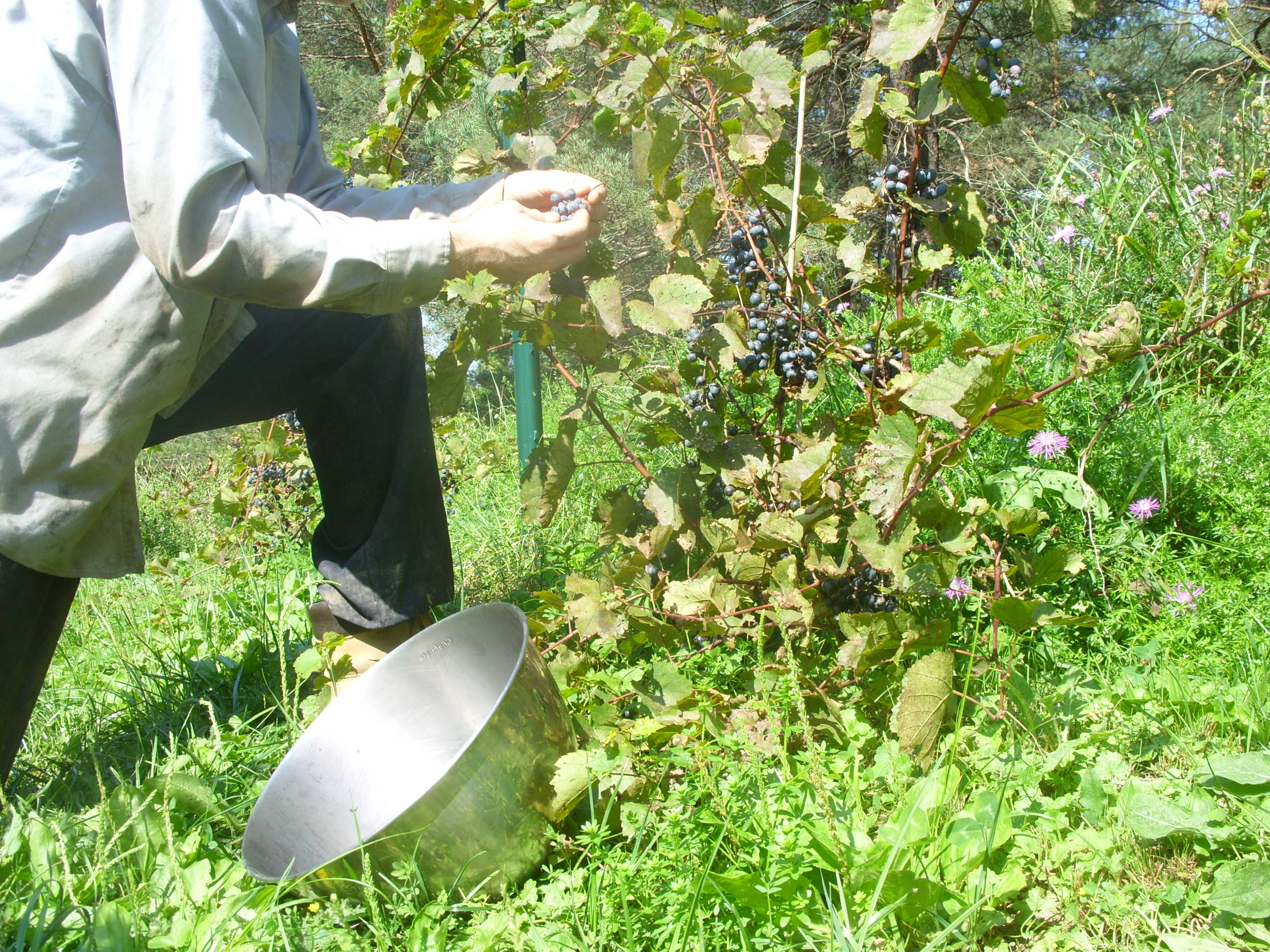
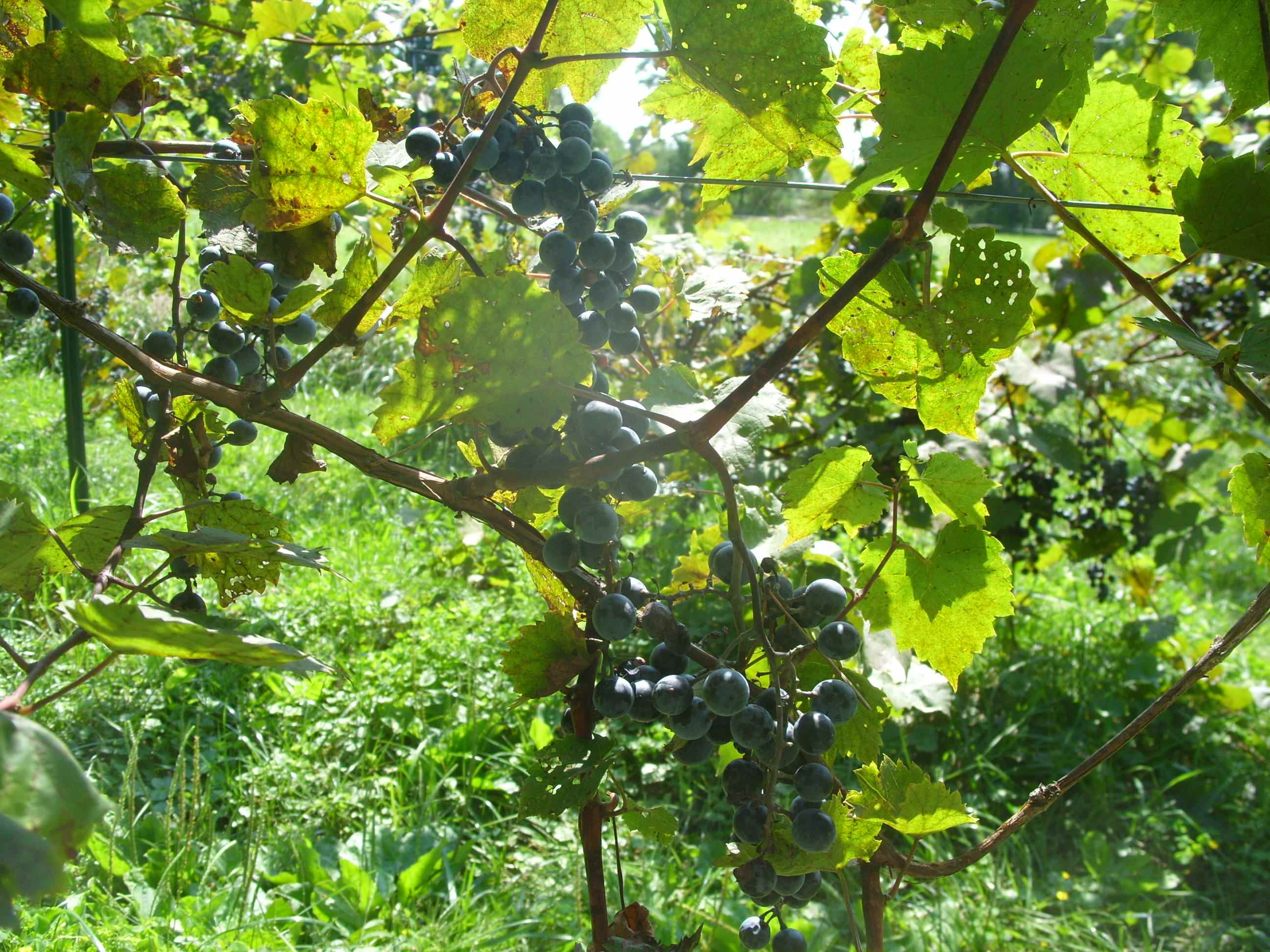
Now here are some photos from September 2012 - harvesting my first crop of grapes! It was a long day of work, but I ended up with about three gallons of crushed grapes, out of which I made some great-tasting wine (I opened a few bottles around Christmastime.)
Above: Picking the grapes.
Above: Ripe grapes!
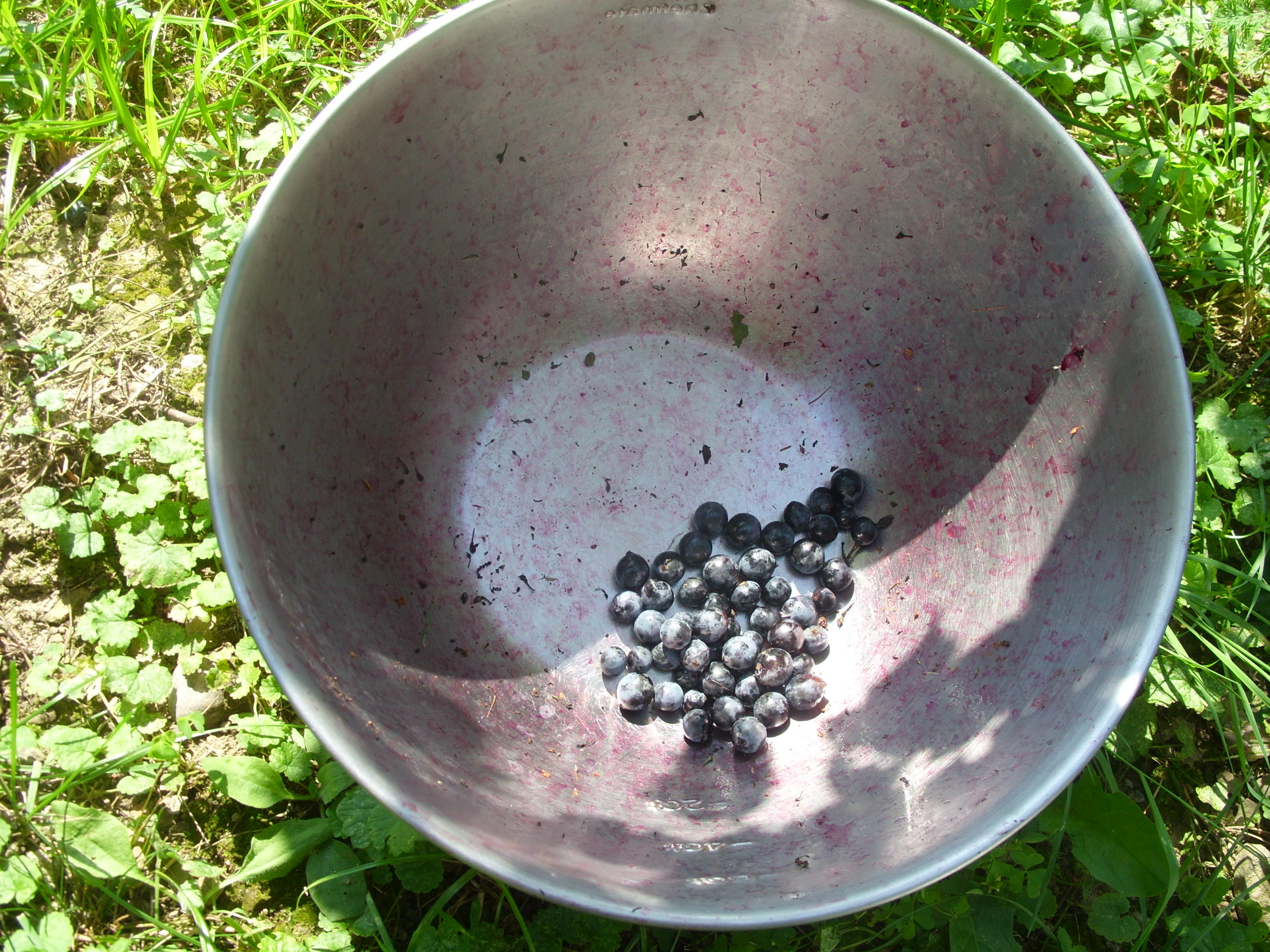
Above: Freshly picked grapes in the steel pan I brought into the vineyard.
Some other dry stone projects around my house...
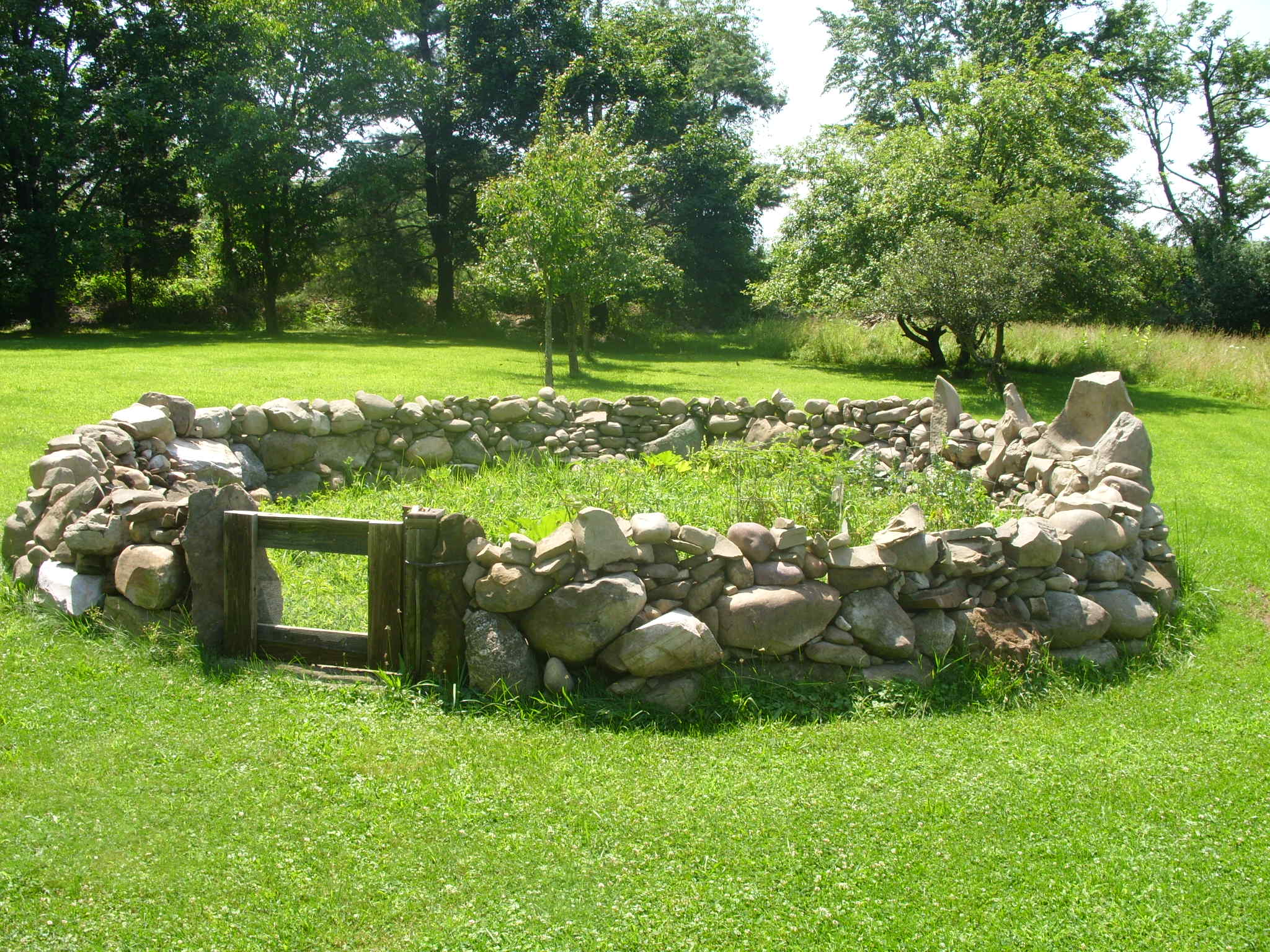
Above is my stone walled garden. The door is just some treated wood I had, with some screen across it. I fashioned a makeshift hinge from scrap parts.
Dry stone is great because it costs nothing - the raw materials are in the ground for the taking. The rest is up to your imagination.
"Dry stone" refers to construction without any mortar or cement of any kind - just laying rocks on top of one another. All of these projects are on my property in Columbia County, New York, which is about 30 miles south of Albany on the east side of the Hudson River.
My projects are purely using rocks from my 3.5 acre property. I basically dig them up, drag them across the property, and use them.
I find stones of all sizes and shapes, which makes for interesting constructions. Some are gigantic and quite a challenge to move.
This is a great way to decompress/unwind after a hard day of work. My wife thinks it's a bit nutty but everyone who visits the house "oohs and ahhs" when they see the results. It's great to have unique, hand-made, bigger-than-life structures. Plus it's a great workout. Only trouble is that I can't get out there in the winter when the ground is frozen.
I use basic hand tools - shovel, pickaxe, and a large metal bar for prying heavy ones. I created my own "wagon" of sorts for hauling the heavier rocks.
I do most of my projects without formal written plans. I basically imagine the project in my mind and start building stockpiles of rock. Then, based on the material on hand after a season of digging, the plans in my mind become more detailed and it becomes a jigsaw puzzle of sorts.
The overall plan remains, though the details develop organically based on the shapes and sizes of the rocks I have dug up. So the final rock structure is never exactly what I first envisioned - but it is often more interesting! And certainly more of a natural extension of the land itself.
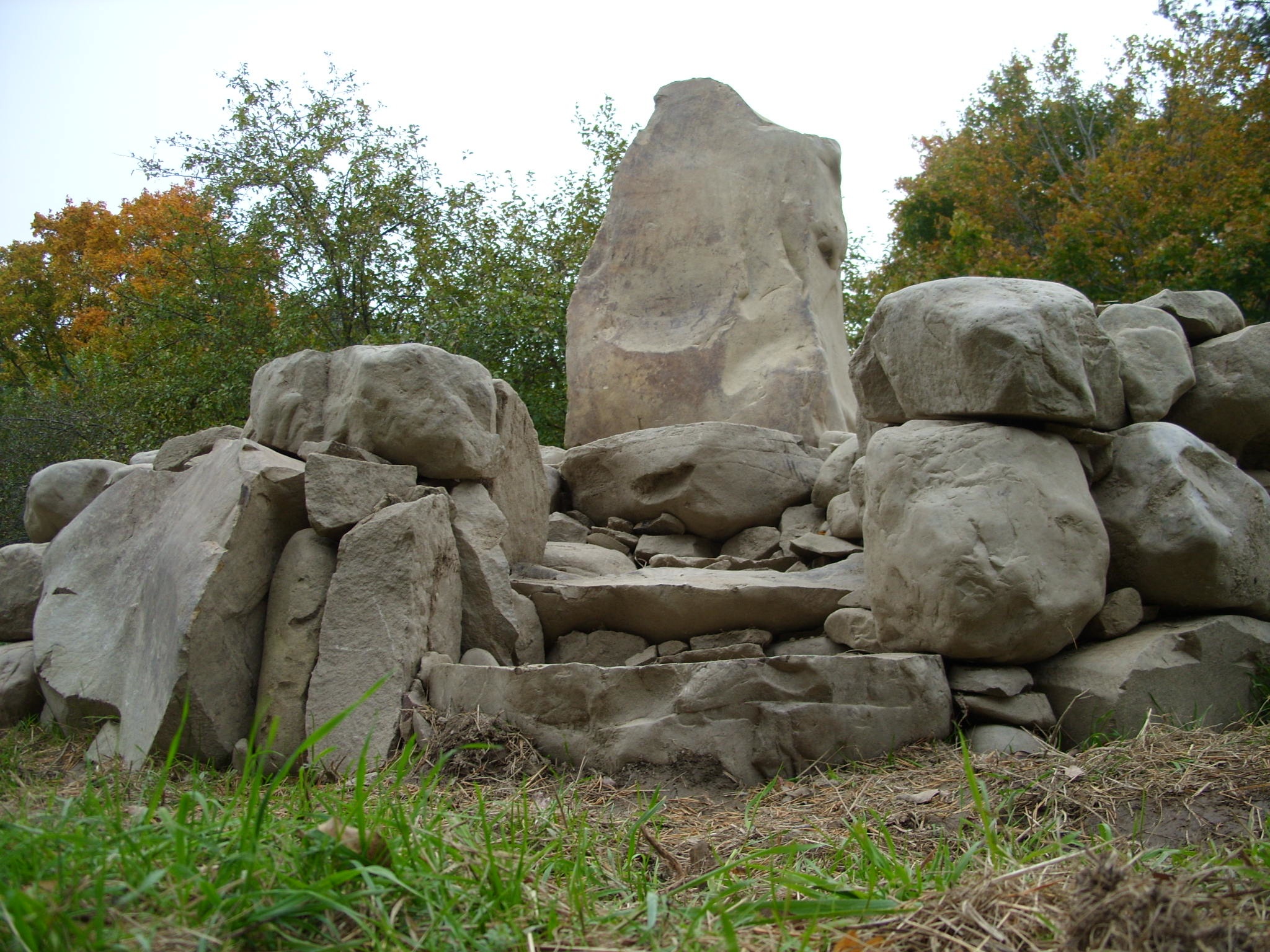
The completed "monolith" from a low angle. The vertical gargantuan stone ( I reckon about 600- 700 pounds at least) I jacked up using a scissors car jack and various pieces of wood to steady it as it rose up into the air!
Here you can see both the monolith and the garden together.
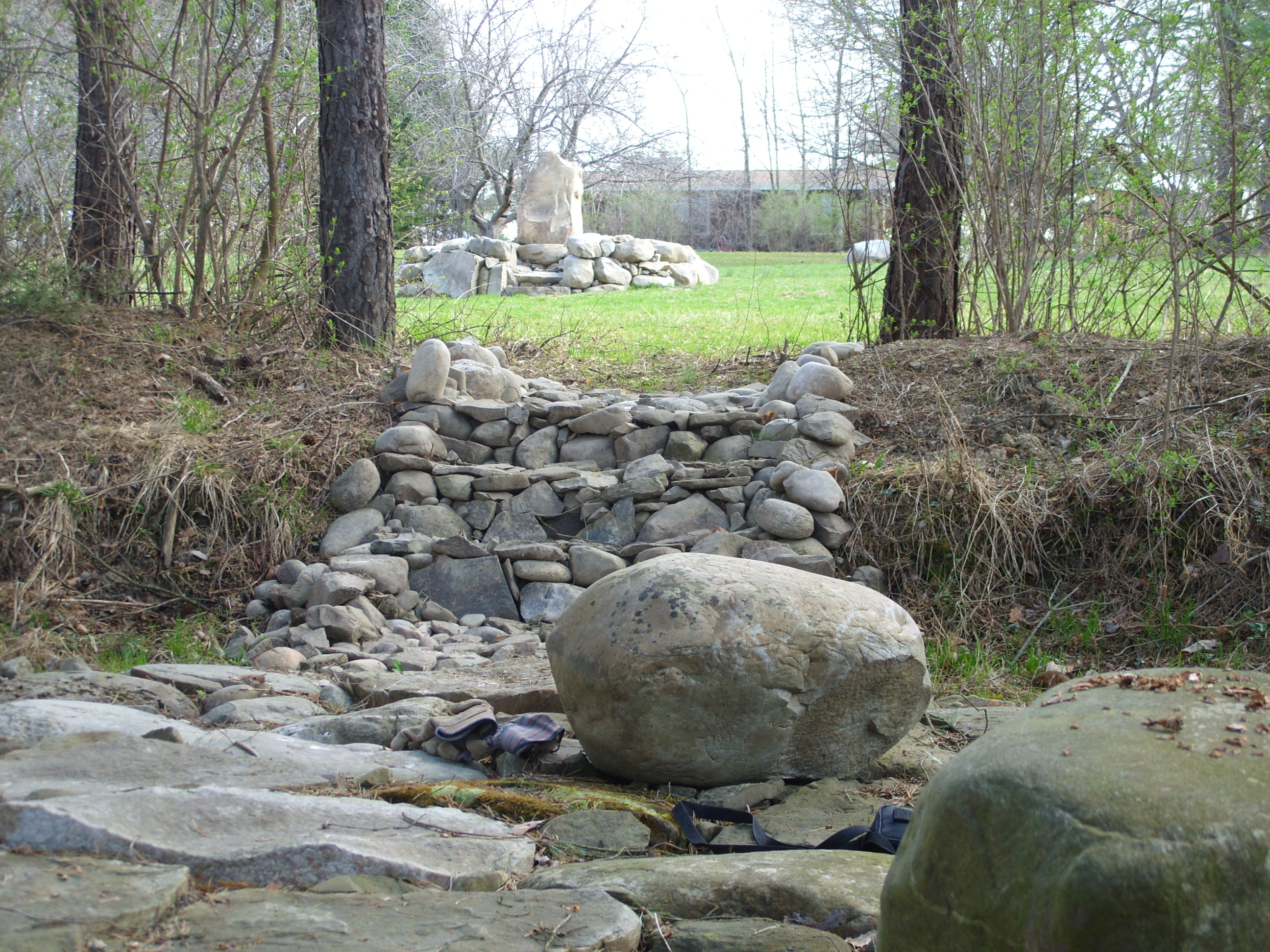
Here is the monolith as seen from the stone platform in the woods.
After making the monolith "throne" it took me three years to complete a stone wall circle around it. Here is a video showing the work and the song I wrote about it: